
Calhoun County Bench Warrants Explained
A bench warrant is what a judge signs when someone misses a hearing or skips another court requirement. Calhoun County does not run every case through one courtroom, so the issuing court depends on the charge. A Magistrate Court or Municipal Court may hold a lower-court matter. General Sessions takes the serious criminal cases. Either way, the warrant comes from a judge, not from a docket entry. A ticket alone proves nothing about whether an order exists. Read the court name on the paperwork you have. If it names no court, the Clerk of Court or the Sheriff can route the question. Ask three things: whether a warrant was entered, what case number applies, and whether an appearance or bond condition is attached.
Calhoun County FTA Warrants Follow Court Orders
The South Carolina Judicial Branch calls its form SCCA/523, Bench Warrant After Failure to Appear, and it is a court document rather than a search result. The bench-warrant memo describes the order plainly: law enforcement must bring the defendant before the issuing court as soon as possible, and a 24-hour appearance rule applies after pickup. That describes court process, nothing more. Not every missed hearing produces a warrant in Calhoun County. For a specific date, notice, or case, ask the issuing court instead of assuming.
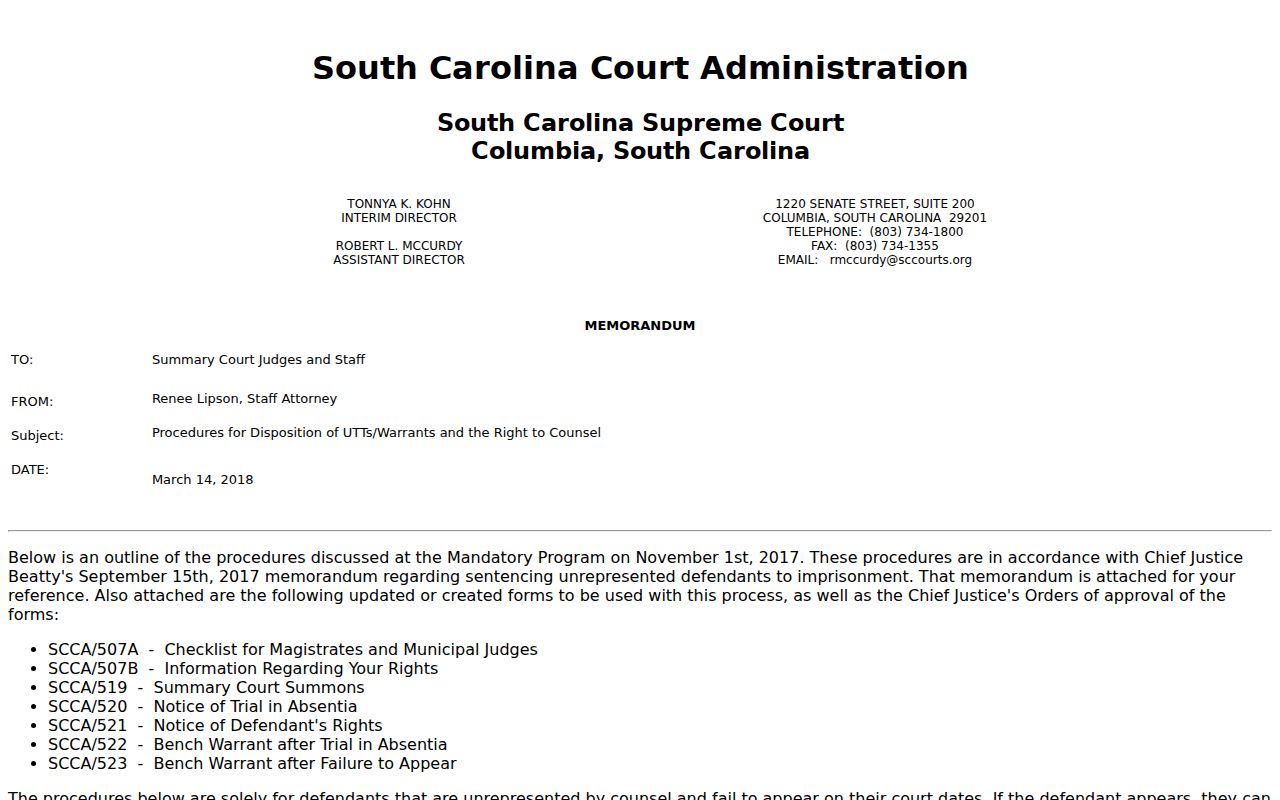
The court memo explains general handling and cannot confirm an individual order.
How Calhoun County Bench Warrants Are Issued
A judge, not a clerk, decides whether court action follows a missed appearance or a failure to comply. SCCA/523 gives that decision a formal order and return structure. Whatever the outcome, the court that set the matter keeps the key information. It can tell you which motion, hearing, payment, or appearance is needed. Rule 3 lays out one path: lower-court criminal warrants move through the Clerk to the First Circuit Solicitor. That transfer is case processing, not a public search system for Calhoun County. When a matter has moved forward, confirm the court and docket with the Clerk.
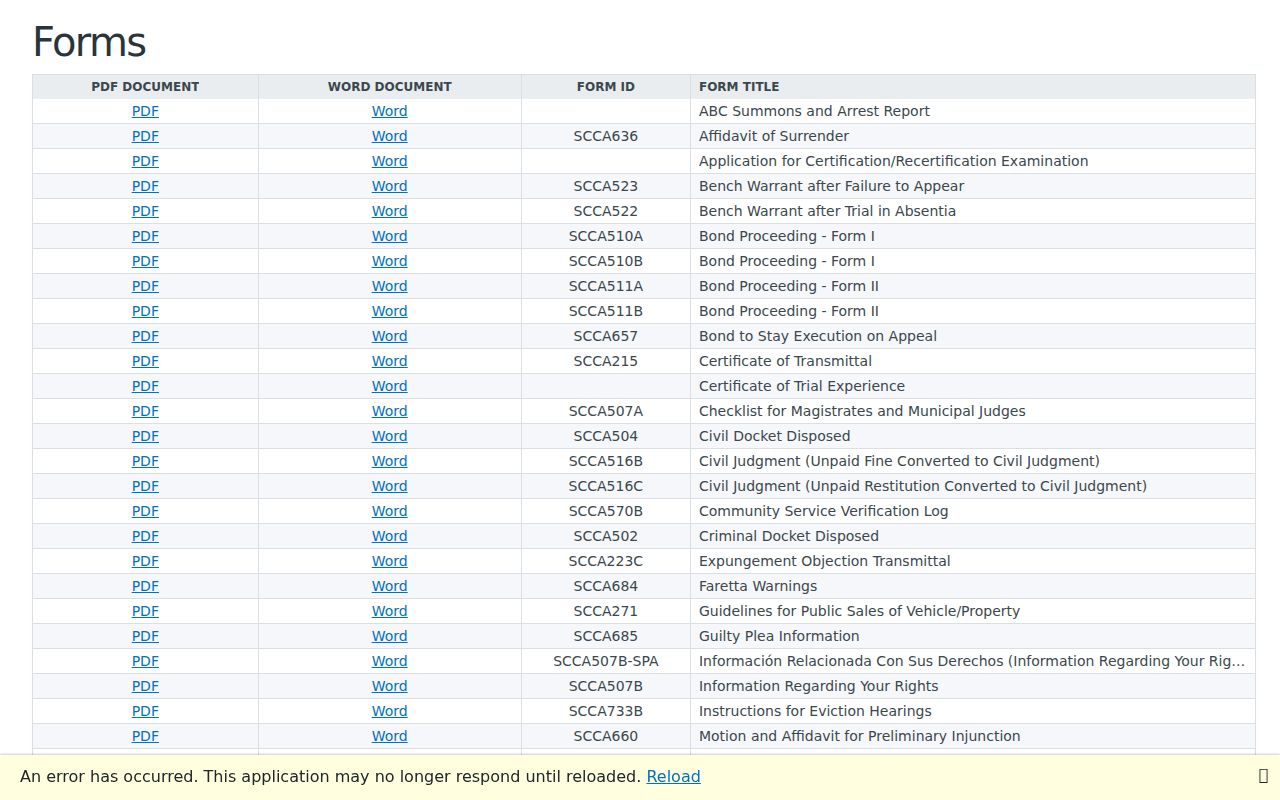
The forms index links official forms for bench warrants, bonds, and related court procedures.
Calhoun County Bench Warrants and Magistrates
Calhoun County lists Magistrate and Bond Court sessions, and it also has municipal courts in St. Matthews and Cameron. A case can sit in a local court even when a county search shows nothing. Location matters here. St. Matthews Magistrate and Bond Court sits at 2833 Old Belleville Road, apart from the Municipal Court on Bridge Street, with the Sheriff's office nearby. The county magistrate directory is the right first stop for office assignment and phone routing. Call before you travel, since directory records can differ.
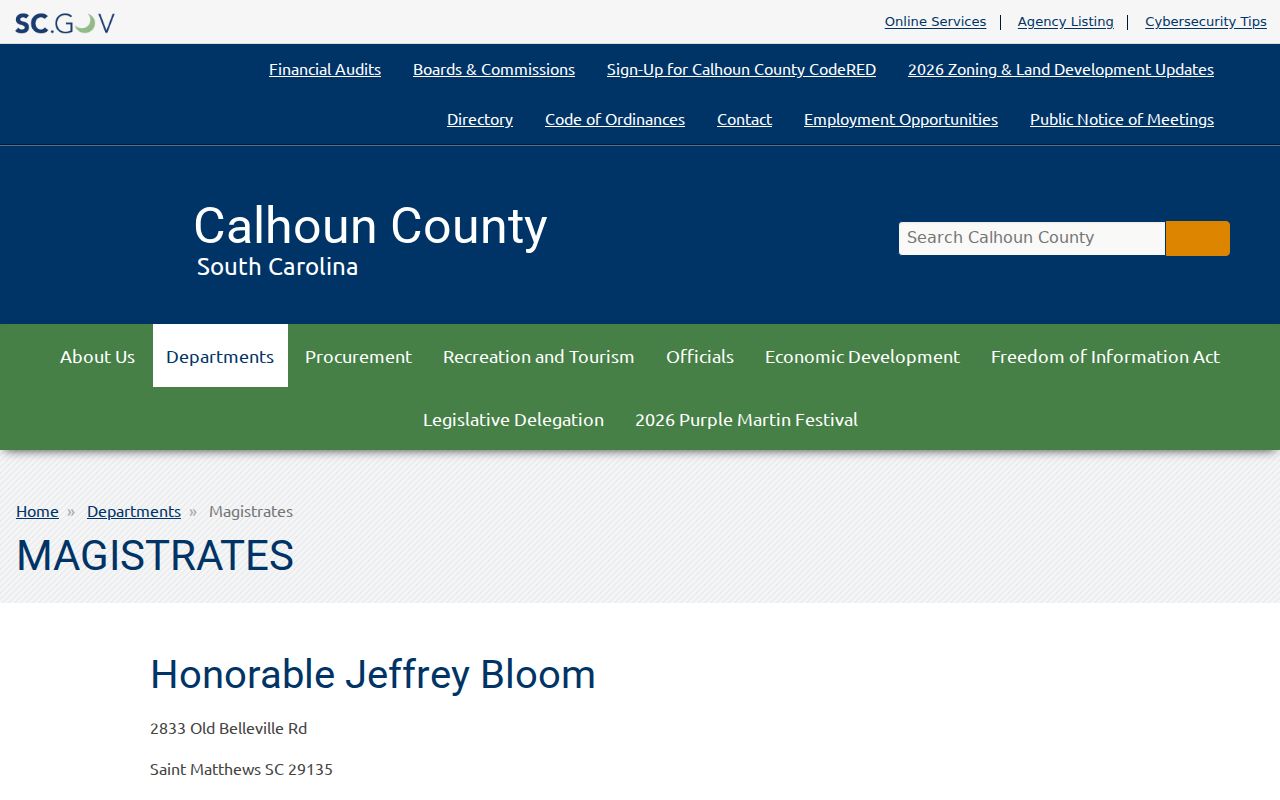
Ask which magistrate or Bond Court has the case before going to a building.
Bench Warrants and Arrest Warrants Compared
Both kinds of order can authorize an arrest in Calhoun County, but they begin differently. An arrest warrant grows out of a criminal investigation and a judicial probable-cause decision. A bench warrant grows out of a court obligation, such as a missed hearing. A summons, by contrast, may simply direct a person to appear.
| Type | Why it begins | First office to ask |
|---|---|---|
| Bench warrant | Missed hearing or failure to comply with a court order | Court that set the event |
| Arrest warrant | Judicial approval after a criminal investigation | Issuing court, then Sheriff for service routing |
| Summons | Notice to appear on a stated matter | Court named on the notice |
The court paper and the missed event identify the process to ask about.
Calhoun County Bench Warrants and Fine Hearings
Unpaid fines and restitution run through a different door: the rule-to-show-cause process. SCCA/516A is the state form for a nonpayment hearing. It is not the SCCA/523 bench-warrant form, and an unpaid balance alone does not mean a warrant exists in Calhoun County. Ask the court whether a hearing was scheduled, whether a separate order issued, and whether payment is accepted before the hearing date. For a traffic fine, confirm which court issued it and whether a missed appearance created a separate bench warrant. Keep your receipt. Ask for a written record update afterward.
Do not guess: A fine, ticket balance, rule-to-show-cause, and bench warrant are different records. The court can identify which one applies.
Resolving a Calhoun County Bench Warrant
Ask the issuing court first. It may set a hearing, require an appearance, accept a permitted payment, or consider a motion filed through counsel. Bond terms depend on the court and the case. Paying a ticket, speaking with a different court, or leaving a message does not recall the order. A lawyer can advise whether to seek a new date, request a recall or quash, arrange a surrender, or address bond. Recall means the judge withdraws the order. Quash means the court sets it aside. Either way, the court must enter the action on the record before anyone can rely on it. For a broader status-check route in Calhoun County, the Calhoun County warrant overview lists the offices that hold and serve these records.
Calhoun County Bench Warrant Bond Questions
South Carolina bond forms cover a range of situations: release on own recognizance, secured or conditional bail, and forms for a surety seeking relief or surrendering a defendant. Bond is a court process with distinct roles. The forms promise nothing about a set amount or a payment method for a particular person in Calhoun County. Ask the issuing court or Bond Court about the amount, the conditions, where to appear, and what proof to bring. The Clerk can route General Sessions bond questions. A surety should confirm with counsel or the court which form applies before filing.
| Own-recognizance bond | An appearance promise documented through the court. |
|---|---|
| Secured or conditional bail | A bond arrangement with conditions set by the court. |
| Surety relief or surrender | A separate process for the person or surety named on the bond. |
Finding the Court That Issued the Warrant
Start with the paperwork. The citation, summons, bond paper, or hearing notice should carry the court name and case number, so read those lines first. Calhoun County's Public Index and Court Rosters can help you locate a case, though they lag behind and prove nothing about live warrant status. Still unsure which court issued the warrant? Ask the Clerk of Court to route a General Sessions or Family Court matter, or call the local Magistrate directory for a summary-court case. A courthouse directory gathers county court contacts, but its address listings differ, so confirm the location before you drive anywhere. The Sheriff's general line is 803-874-2741; the Clerk of Court is 803-874-3524.
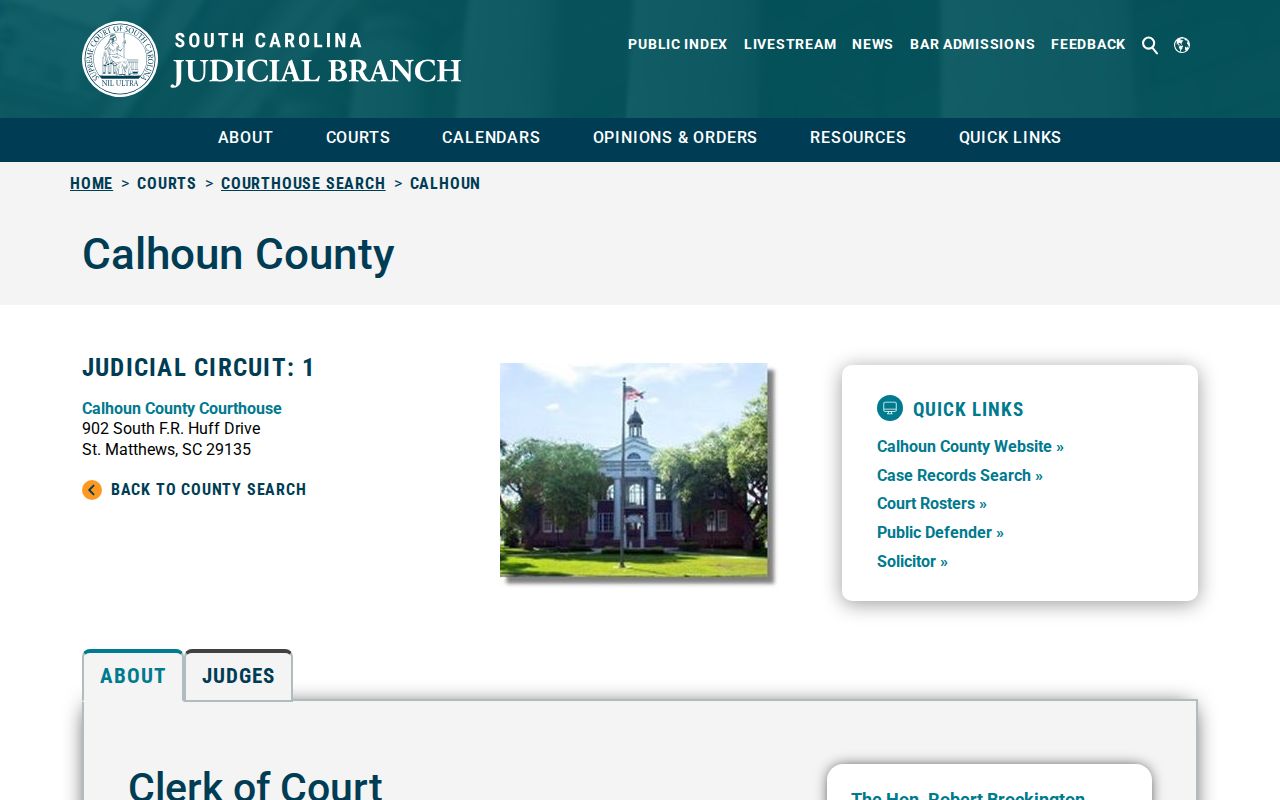
A confirmed court name and phone number save you a wasted trip to the wrong Calhoun County office.
Calhoun County Court Links Do Not Show Every Warrant
Online Calhoun County court records leave gaps. Sealed, juvenile, confidential, and very new matters often do not appear, and a court roster is not a warrant list. The Sheriff posts no public warrant roster at all. You can request records under South Carolina FOIA, but that law does not force the release of active law-enforcement details. So treat any case result as a lead, not an answer. Take the case number to the court that issued the warrant, ask for its current status, and find out what the court wants you to do next. Keep every order, receipt, or new hearing notice you receive.